Developed by 1Energy, the UK’s leading low-carbon heat network developer, the network is cutting customers gas demand by 75%, representing a key milestone in Bradford’s journey to energy security.
Currently, 45% of the UK’s gas supply is imported. Organisations that connect to the network can swap their dependence on foreign fuel for greater control, with home-grown energy helping bring bills back into British hands and protect against price hikes. As the project allows them to avoid replacing aging boilers, it can also save money on maintenance.
John Hartley, CEO of 1Energy, said:
“For generations, this site supplied the gas that powered Bradford. Today, it begins a new chapter, providing low-carbon heat for some of the city’s best-known buildings and putting Bradford at the forefront of modern energy infrastructure.
“Connecting to the Bradford Energy Network gives organisations a practical way to reduce their reliance on gas, moving away from ageing boilers and towards modern energy infrastructure that will strengthen the city’s energy resilience. This £75 million investment creates infrastructure that can grow with Bradford and support its businesses and public services for decades to come.”
While the network currently makes use of one of the UK’s largest air source heat pump systems, it can also incorporate additional local heat sources as it grows, such as surplus heat from businesses. This strengthens the city’s long-term energy resilience and gives local companies an opportunity to benefit.
The project is protecting public health and cutting healthcare costs across Bradford by reducing harmful air pollution from connected buildings by 75%. It is also expected to cut carbon emissions by at least 75%, saving over 2,200 tonnes of carbon in its first year, equivalent to removing up to 15,000 short haul flights.
Cllr Andrew Judson, Deputy Leader of Bradford Council, said:
“Bradford is showing other cities what can be done by delivering modern energy infrastructure that supports our regeneration ambitions and strengthens the city’s offer to businesses and developers. It is an achievement the whole city can be proud of, showing how Bradford is leading the way in building a more resilient local economy.
“By reducing reliance on imported gas and improving air quality, the network will bring lasting benefits for local people. As it grows, it can support more businesses and buildings, providing infrastructure that helps Bradford attract further investment and thrive.”
The project uses air source heat pump systems to extract warmth from the air, concentrate it, and turn it into useable heat. Producing enough reliable, clean heat to supply the equivalent of 10,000 homes per year, the scheme is now warming Bradford College’s David Hockney Building and Advanced Technology Centre, sites at the University of Bradford, and the city’s courts and council buildings.
The network carries heat from the energy centre across Bradford, via a 5km (3 mile) network of underground insulated pipes, to the company’s customers. Heat exchangers then transfer warmth into the heating systems in connected buildings, replacing heat that was previously produced by individual gas boilers.
Chris Malish, Vice Principal of Bradford College, added:
“Joining the Bradford Energy Network is another significant milestone in Bradford College’s sustainability strategy. A total annual direct carbon saving of over 285 tonnes per year is predicted, moving us a step closer to achieving Net Zero.
“Nearly 3,500 staff and students based at our David Hockney Building and Advanced Technology Centre will benefit from this transition to renewable energy. Given Bradford is one of the UK’s youngest cities, it’s vital that we future-proof our region for the next generation, and we are delighted to be at the forefront of this work.”
Developed at no cost to the local community, the project represents £75mn of investment in Bradford, combining £55mn of private capital and £20mn of Government investment through the Green Heat Network Fund (GHNF). With a further £9.7mn in GHNF funding secured to support the networks expansion, 1Energy could invest over £100mn into the network as it grows.
As the first heat network in the UK that was funded by institutional investors, including pension funds and asset managers, it establishes a model for financing the country’s transition to energy resilience. Using the ‘Bradford blueprint’, 1Energy plans to deploy a further £700mn across its wider portfolio over the next 10 years.
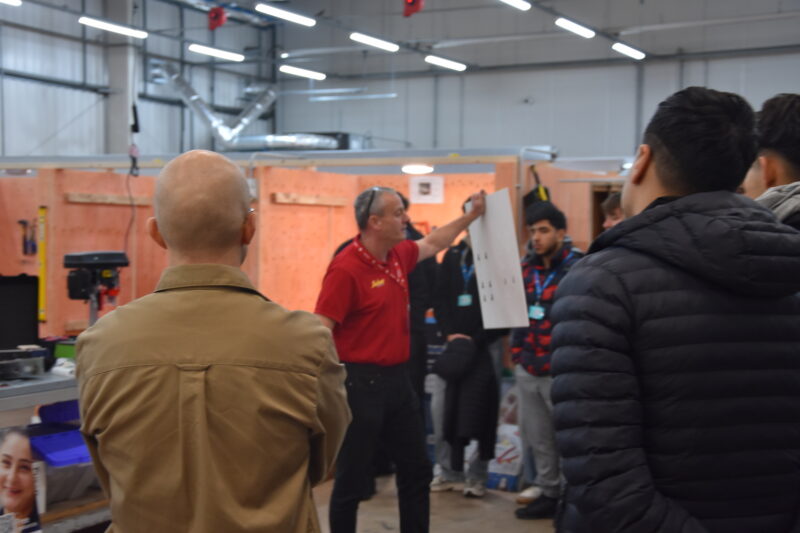
Through the network, 1Energy is supporting young people across Bradford with careers in energy. Alongside the University of Bradford and Bradford College, the company has delivered masterclasses, facilitated energy centre visits, placements and apprenticeships – enabling them to continue playing an important role in a project they helped unlock.
Find out more at 1energy.uk/networks.